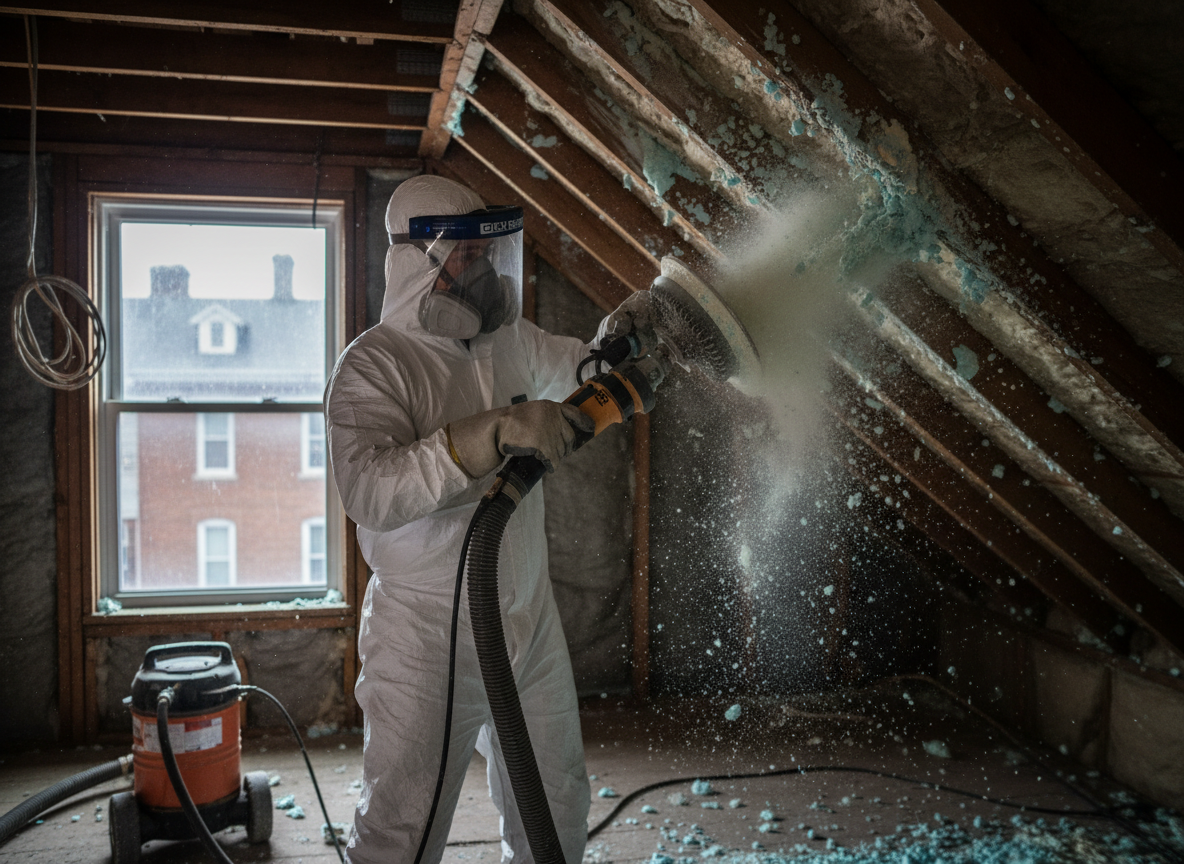
Closed cell spray foam bonds tightly to timber joists and masonry in York’s Victorian terraces and Georgian buildings, often installed to improve insulation during the 2000s energy upgrades. Over time the material can trap condensation against external walls, particularly on north-facing elevations exposed to North Yorkshire’s frequent rainfall and cold winters. Removal requires careful cutting and scraping to avoid damaging original lath and plaster or stonework that remains common in Heslington and the surrounding villages.
York properties frequently sit on clay soils that hold water, increasing the risk of damp once the foam’s vapour barrier is breached. Technicians must check for hidden rot in floor joists and roof timbers before any new insulation goes in. Work in these older homes often involves temporary propping of ceilings and controlled dust extraction to protect nearby historic features such as exposed beams or ornate cornices.
Local building control in the York area expects any replacement insulation to meet current ventilation standards, especially in converted attics and under-floor voids. Removing closed cell foam also means disposing of the waste through licensed channels rather than general landfill, a step that adds time on site but prevents future compliance issues for the homeowner.
Access constraints appear regularly in narrow York terraces where scaffolding or internal protection is needed to reach upper-floor voids without disturbing neighbours. 24/7 availability from the Heslington base at Providence House, 2 Innovation Close, YO10 5ZF allows urgent call-outs when water ingress is discovered during heavy seasonal rain.
Technician insight
In York, the thing that catches most people out with closed cell spray foam removal is how quickly moisture builds behind the foam on the city’s older stone and brick walls once the original breathability is lost, especially in properties near the Ouse where winter flooding raises ground water levels.
Attic Removal in a Heslington Terrace
Closed cell foam in a 1930s terrace near the University had trapped condensation against the rafters. Inspection showed early rot along the eaves. The team cut out the foam in sections, treated the affected timber and improved ridge ventilation. The loft now stays dry through the wet York winters without further intervention.
How it works
- 1
Site Inspection
Assess foam condition, moisture levels and structural timber in the York property before any work begins.
- 2
Protection and Access Setup
Install dust barriers and temporary supports to safeguard floors, walls and historic details during removal.
- 3
Foam Extraction
Cut and remove closed cell material in controlled sections, monitoring for hidden damp or rot in joists and walls.
- 4
Cleanup and Ventilation Check
Clear debris, improve airflow where needed and confirm the space meets current standards before handover.
Pricing
Upfront quotes issued after on-site inspection; cost varies with access, depth of foam and any timber repairs required.