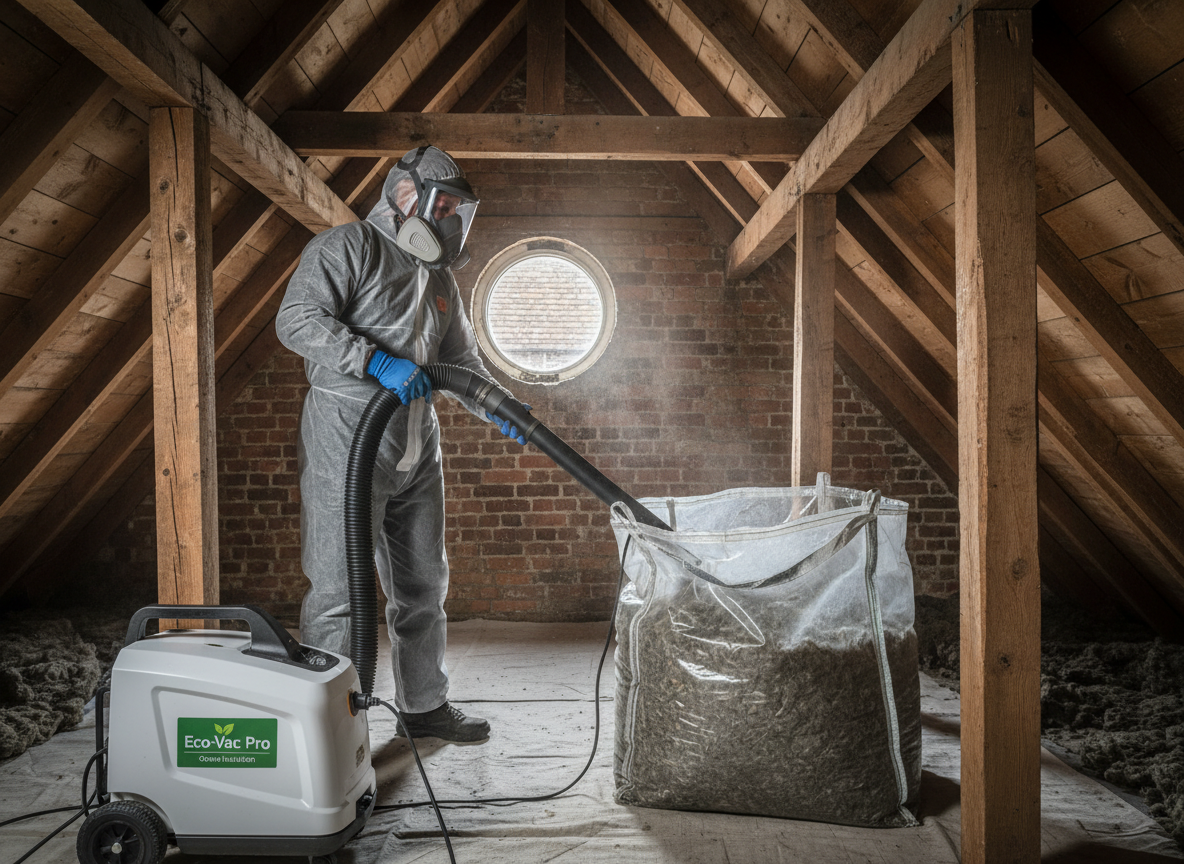
York's older terraced and semi-detached homes, particularly those built before the 1970s in areas like Heslington and along the Ouse, often contain closed-cell spray foam applied directly to roof voids or under floors. Removing this material without damaging original timber or plaster requires controlled mechanical extraction combined with vacuum systems that capture particulates at source. Moisture trapped beneath foam in North Yorkshire's damp winters can lead to hidden rot, so inspection with moisture meters precedes any work to identify affected joists before stripping begins.
Environmentally friendly removal avoids solvents and focuses on mechanical separation followed by bagging for licensed disposal or recycling where possible. In properties near the city centre or along the river, limited access through narrow loft hatches or external scaffolding on listed buildings adds time and changes the sequence of extraction. Homeowners in these settings frequently discover that previous installations blocked ventilation paths, creating condensation issues that only become visible once the foam is gone.
Regulatory checks for older York stock include confirming no asbestos in adjacent materials and ensuring the work does not compromise fire separation between attached dwellings. Technicians working from Providence House in Heslington routinely map airflow routes after removal to restore proper roof ventilation suited to the region's frequent rainfall and temperature swings.
Edge cases include foam that has bonded to electrical cables or pipework in converted attics common around the university campus; these require hand removal in stages rather than aggressive scraping to prevent damage that could affect insurance compliance.
Technician insight
In York, the thing that catches most people out with environmentally friendly insulation removal is how often foam in pre-war terraces around Heslington has trapped years of condensation against original lath and plaster ceilings, turning a straightforward extraction into a repair job once the material comes off.
Blocked Vents in a Heslington Terrace
Foam installed years earlier had sealed every roof vent in a 1930s York terrace near the university. We found widespread surface mould on rafters once the material was stripped. Mechanical removal with vacuum containment cleared the foam while preserving the original timbers, then we reopened the vents to match the area's typical rainfall patterns. The homeowner reported drier loft conditions within weeks.
How it works
- 1
Initial Assessment
Inspect roof voids, floors, and wall cavities in the York property to map foam locations and check for moisture damage or blocked vents.
- 2
Site Preparation
Protect floors, electrics, and access routes while setting up containment and negative-air equipment suited to the building's layout.
- 3
Controlled Extraction
Remove foam using mechanical tools and vacuum collection, separating material for responsible disposal without chemical solvents.
- 4
Ventilation Restoration
Clear blocked airways and confirm restored airflow meets the needs of North Yorkshire's wet climate before final clean-down.
- 5
Final Walkthrough
Review cleared areas with the homeowner and note any follow-up repairs required for timber or plaster affected by prior insulation.
Pricing
Cost depends on property age, access difficulty, and volume of material in York homes; quotes are provided after site visit.