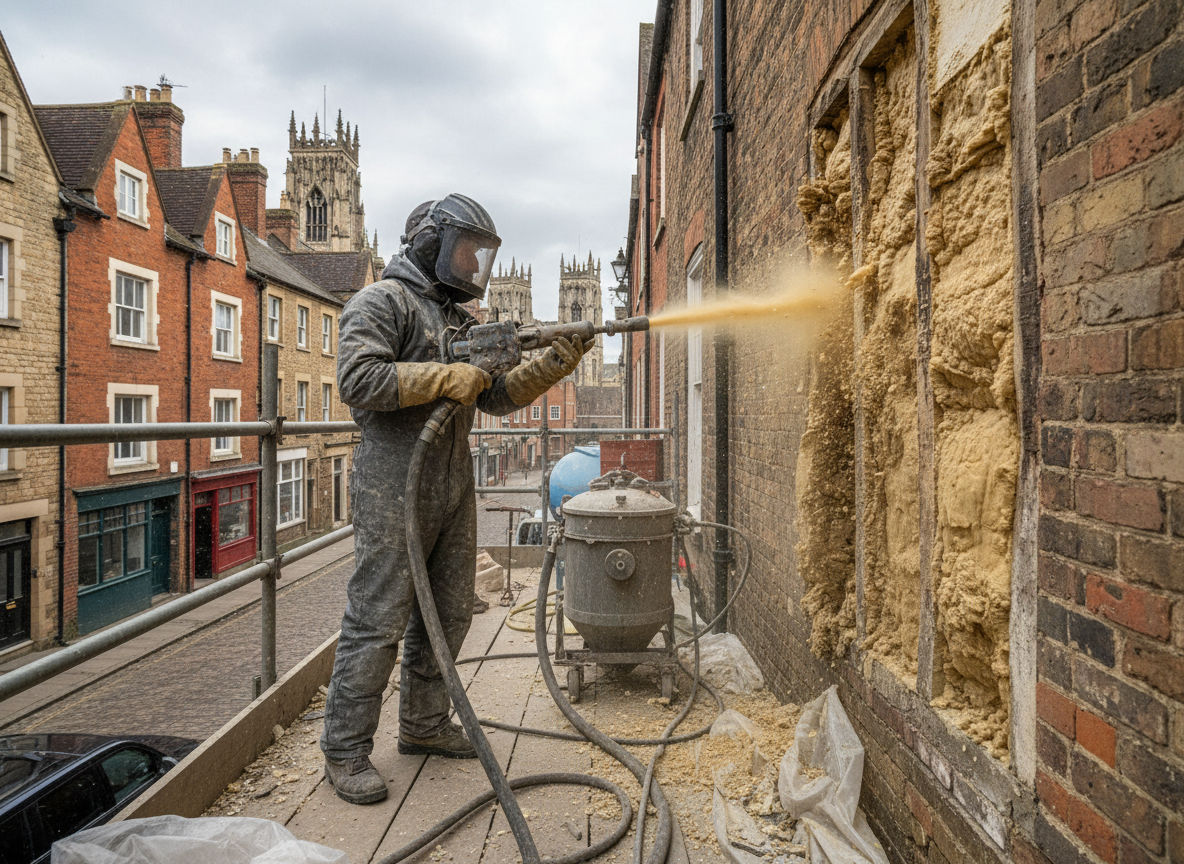
Sand blasting removes spray foam from solid stone and brick walls common in York terraces and Heslington properties without damaging underlying masonry. Older York housing stock from the Victorian and Georgian eras often features irregular surfaces and lime mortar that require lower pressures and finer media to avoid erosion. Damp conditions typical of the York area can trap moisture behind foam, leading to hidden rot that only appears once the insulation is stripped away.
Edge cases in the York region include listed buildings where permissions may apply and properties near the River Ouse with higher groundwater levels that complicate dust containment. Sand blasting generates fine silica dust that must be captured on site to protect neighboring homes in dense streets. Technicians check for lead paint layers frequently found in pre-1970s York homes before starting any blasting work.
The process demands sequential passes with progressive media grades to clear foam residue from joist voids and behind skirtings without gouging soft brick. Post-removal inspection reveals whether original ventilation paths were blocked, a frequent issue in converted York attics. Proper extraction prevents airborne particles from settling into neighboring gardens or entering shared chimneys common in the city.
Technician insight
In York, the thing that catches most people out with sand blasting spray foam insulation removal is how often the foam was sprayed directly onto damp lime mortar in Victorian terraces around Heslington and the city centre; once blasted away the walls start shedding and need immediate stabilization before any new insulation goes back in.
Heslington Terrace Foam Removal
Homeowner in a 1890s Heslington terrace noticed persistent damp after spray foam was added years earlier. Inspection showed foam had bridged a blocked air vent and trapped moisture against the stone. Sand blasting cleared the foam while protecting the soft brick, followed by vent restoration and drying. The property now breathes properly with no recurring moisture issues.
How it works
- 1
Site Assessment
Inspect walls, cavities and roof spaces to map foam depth and identify any hidden timber or wiring risks.
- 2
Containment Setup
Seal rooms and install negative air machines to keep dust from spreading through York terraced homes.
- 3
Controlled Blasting
Apply graduated sand media at adjusted pressures suited to local brick and stone surfaces.
- 4
Debris Removal and Final Check
Vacuum all residue then examine exposed surfaces for moisture damage or structural concerns.
Pricing
Upfront quotes provided after on-site inspection; final cost depends on foam thickness, access difficulty and property age.